
Shares of public sector enterprises have corrected by up to 22 per cent month-to-date until March 19, 2024. Analysts attribute this steep fall to the valuation exuberance seen after a sharp run in these counters last year and suggest investors remain selective regarding the stocks in this space. "The rally in public sector undertaking (PSU) stocks has been stretched and sharp, although it is somewhat justified by improvements seen in earnings, operations, balance sheets, and overall profitability.

The state's joblessness is three times higher than the national average of 7.8 per cent.
The petitioner sought a direction from the court for his registration form to be accepted and to permit him to appear for JEE-Advanced scheduled to be held on June 4.
With the reality of coalition politics staring the BJP in its face, this was inevitable, points out Ramesh Menon.

'The problems that the film explores still remain. It was a different time when we made the film. We were young and we thought we could change the world.'

India's mutual fund (MF) industry had barely any retail footprint when it completed 50 years in 2013. MFs had Rs 7 trillion in assets under management (AUM) in March 2013, of which around Rs 5 trillion was in institution-focused debt funds. By comparison, bank deposits in the country stood at Rs 67.5 trillion around the same time.

Dr Shreekant Sambrani pays tribute to M S Swaminathan, renowned agricultural scientist and a lifelong crusader against hunger who passed away in Chennai recently.

'The prime minister's comment on 'revdi culture' was welcome. But I am disappointed he did not follow up on that.' 'All political parties, including the BJP, have been guilty of this.' 'Now, Modi's guarantees, the Congress's 'nyay' path and both ruling and Opposition parties are vying with each other for freebies in my home state Andhra Pradesh.'

More and more women are making their presence felt in jobs related to sciences, technology, and engineering across organisations.

'The focus needs to shift towards the ability to collect payments, particularly in tier-3 to tier-4 areas where acceptance is still lacking.'

Shrivastava had set her on fire in the college premises leaving her 80 per cent burnt, he added.

Days after JP Morgan announced the inclusion of government bonds in its emerging market (EM) bond index, a host of banks and other financial institutions (FIs) are set to tap the debt market. They plan to raise Rs 18,000 crore by issuing non-convertible debentures (NCDs) and bonds. National Bank for Agriculture and Rural Development (Nabard) plans to raise up to Rs 3,000 crore via five-year social impact bonds on Tuesday, the first of its kind in India.

They all seem to forget that the Music Academy is as much an independent institution as T M Krishna is an individual musician. In drawing those red lines for the Academy management, they do not even seem to recognise that they too have crossed a red line themselves, points out N Sathiya Moorthy.

"I have been at the helm for long. Time has come for me to make way for the younger blood to take over the reins and lead the organisation towards the future," Kurien told mediapersons in Mumbai.\n\n

The Adani group has exited the financial services business by selling its entire 90 per cent stake in Adani Capital and Adani Housing to private equity (PE) firm Bain Capital for Rs 1,440 crore. The total valuation of the Adani financial services business stands at Rs 1,600 crore. Gaurav Gupta, managing director (MD) and chief executive officer (CEO) of the Adani firms will hold the rest of the stake.
Sam Pitroda, chairman and CEO of the US-based World Tel, and the man behind India's telecom revolution said on Tuesday that information technology.

'Just the amount of work which is there just to become more and more successful in banking. For this to happen you need to have leaders who understand technology.'

The markets may be entering a consolidation phase and are expected to trade sideways for now after a good run in the last few weeks, suggest analysts. In this backdrop, they suggest investors can book profits at the current levels and enter the market again on a decline from a medium-to-long term perspective. Thus far in fiscal 2023-24 (FY24), the S&P BSE Sensex has moved up around 5 per cent to nearly 62,000 levels.

Ramji Raghavan is using this principle to help village children from government schools enjoy science and maths. Indulekha Aravind reports

The result is a big blow to the military establishment, revealing the limits of 'political engineering'. It reflected the anger of the electorate, especially its younger voters, who have spoken decisively against the persistent harassment and victimisation of Imran Khan's political party, asserts Rana Banerji, who headed the Pakistan desk at RA&W.
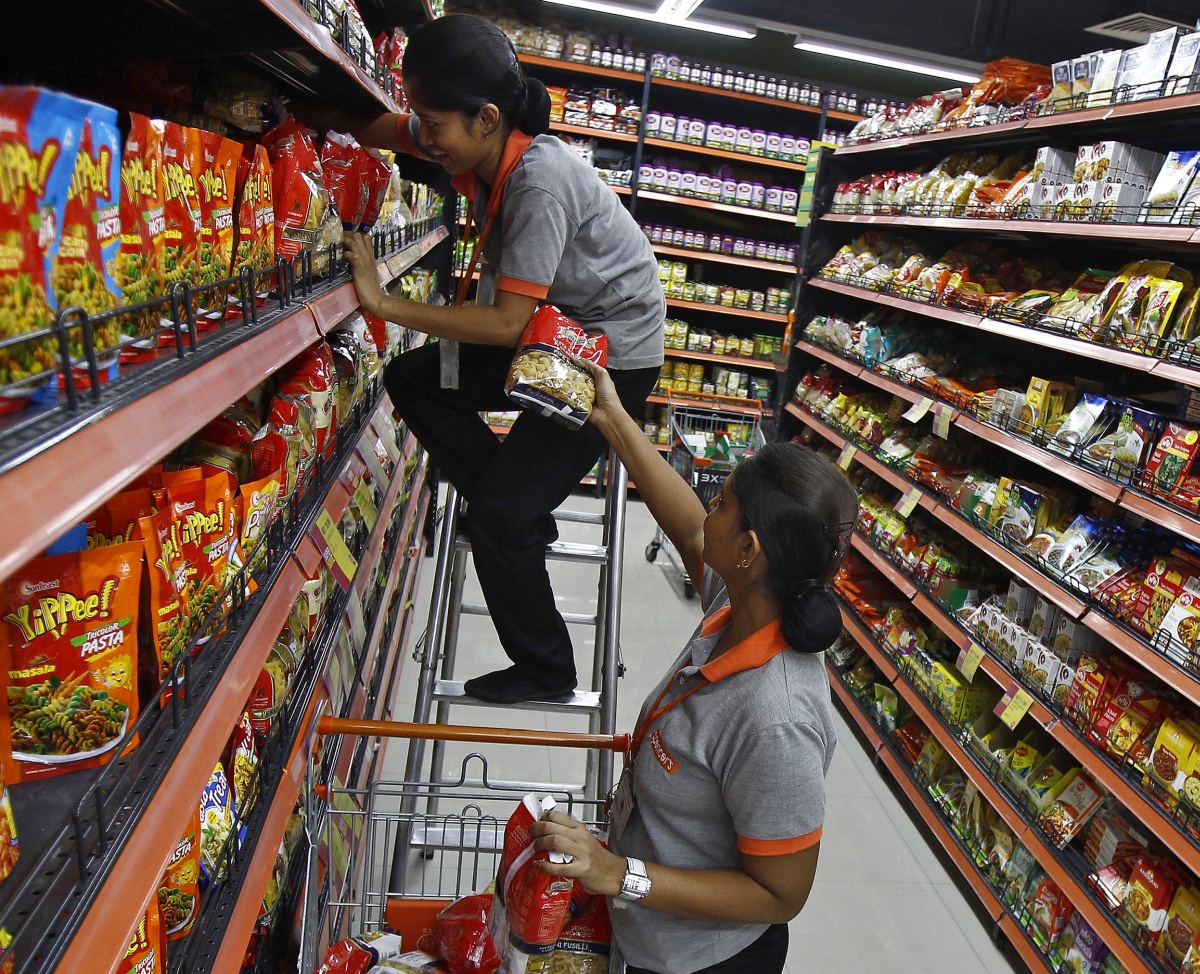
However, rural demand continued to remain a concern for FMCG companies during the quarter.
Shuvajit was confident of making a huge difference in the lives of people in rural India.

'They have since only tried to improve systems. Also, with regulatory guidance from time to time, we are in a position to assess a situation and react in time.'
'One of the biggest employment generators, the MSMEs, have not got much from the government.'

Management campuses are expecting the rise in pre-placement offers to ease the final placement process.

They are witnessing, or anticipating, a double-digit growth in job offers over the same period last year.
About 150 years ago, in British India, big farmers in the western region of Maharashtra agitated over unfair lending practices and demanded a more fair and inclusive financing structure. People say this is where the seeds of the cooperative movement, now omnipresent in the country, were sown. Today, more than 800,000 cooperative societies thrive in India, with 300 million members, a number close to the population of the United States. Despite a reach this deep--grass roots as they call it--cooperatives do not occupy a lion's share in the Indian economy.

A lesson we have not learnt from China is the urgent need to knit the vast country together to keep it from falling apart at the seams. While there is considerable dent in poverty, sadly, the North East remains as distant today as it always was, points out Shreekant Sambrani.

Sanjiv Mehta, chairman of the country's largest consumer goods company, HUL, believes that the second wave of the Covid-19 pandemic between April and June this year has been a mere pause in India's consumption story, and that it will not change the country's overall growth trajectory. India is poised for growth, especially in the fast-moving consumer goods (FMCG) sector, Mehta told shareholders at the company's annual general meeting on Tuesday. The signs of recovery are becoming evident with many states lifting lockdown restrictions in recent weeks.
A scrutiny of the PM's statements in the last 12 weeks lays bare a stunning lack of homework for a policy that has affected each of the 1.25 billion people of India.

Terming it as an important day in history, Shah said Madhya Pradesh has become the first state in the country to start the MBBS course in Hindi.
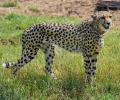
'The space required for wild cheetah populations to thrive was grossly under-estimated.' 'Cheetahs, because of their social system and ecologically fragile nature, live at only 1 cheetah per 100 sq kms even in the best habitats of Africa.'

'As the Indian economy continues to expand over the next three years, mid- and small-caps should do well as they have higher exposure to the domestic economy than large-caps.'

GST, a much needed reform that widens the tax net, promises to strangle many legitimate businesses while they wait for the tax administration and systems to catch up, says Rahul Jacob.
In the context of market integrity, the IRAI and RBI should go over the minutes of the LIC and SBI board meetings when the decisions to invest in Adani equity or debt were taken, notes Jaimini Bhagwati, former World Bank treasury professional.

'What we have to think about is, how to improve the efficiency of public sector banks.' 'You have to make decision-making more prudent, and free from government intervention.'

Former Karnataka chief minister S M Krishna, noted industrialist Kumar Mangalam Birla and famous playback singer Suman Kalyanpur were given Padma awards by President Droupadi Murmu at a ceremony at the Rashtrapati Bhavan on Wednesday.

Coming Wednesday, Finance Minister (FM) Nirmala Sitharaman will present the 2023 Union Budget - the last full Budget ahead of the 2024 Lok Sabha elections. While India exited 2022 as a relatively bright spot in the global economy, the FM will endeavour to present a Budget that insulates India's economy against global headwinds and recession in advanced economies, while sticking to the path of fiscal consolidation. In this, she is being helped by her core team of trusted advisors.
